Income and expenses
the basics of income and expenses. how to budget, and manage finances by yourself.
This lesson covers the fundamental concepts of income and expenses. You will learn about sources of income, types of expenses, and how to create a budget to manage your finances effectively.
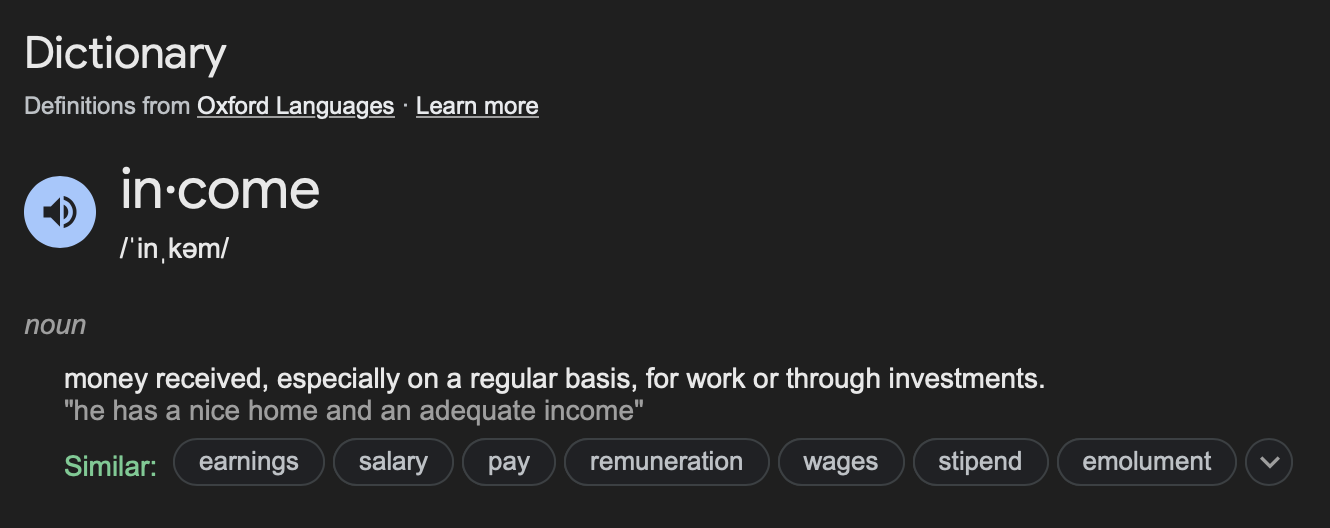
There are two main categories of income:
- Earned Income: This is the money you make through your work or efforts. Here are some examples:
- Wages and Salaries: The regular pay you receive for a job.
- Bonuses and Overtime: Extra payments you earn for exceeding expectations or working additional hours.
- Tips and Commissions: Earnings directly tied to customer service or sales performance.
- Unearned Income: This is money you receive without actively working for it, sometimes referred to as passive income. Examples include:
- Interest and Dividends: Earnings from savings accounts, investments, or stocks.
- Rental Income: Money you receive from renting out property.
- Social Security Benefits: Government retirement benefits.
- Pensions and Annuities: Retirement income from previous employers or insurance policies.
- Unemployment Benefits: Government assistance during job search periods.
Now that you know where your income comes from, let's explore how you spend it. Expenses can be categorized in three main ways:
- Fixed Expenses: These costs stay relatively constant each month. They are usually essential for your living situation. Examples include:
- Rent or Mortgage Payments: The cost of housing.
- Loan Payments: Payments on car loans, student loans, etc.
- Insurance Premiums: Payments for health, car, or other types of insurance.
- Variable Expenses: These costs fluctuate from month to month depending on your needs and habits. Examples include:
- Utilities: Electricity, water, gas bills.
- Groceries and Food: Expenses related to your food needs.
- Transportation: Costs associated with getting around (gas, public transport fares, etc.).
- Entertainment and Leisure: Expenses on hobbies, dining out, or going to movies.
- Discretionary Expenses: These are non-essential purchases you can choose to cut back on if needed. Examples include:
- Dining Out: Eating at restaurants instead of cooking at home.
- Vacations and Travel: Costs associated with leisure trips.
- Hobbies and Non-essential Purchases: Expenses on things you enjoy but aren't essential (e.g., gym memberships, new clothes, new car parts, new fragrance collection).
Unexpected Expenses:
Life throws curveballs sometimes. It's important to factor in potential unexpected expenses like:
- Medical Emergencies: Costs associated with sudden illness or injury.
- Car Repairs: Unforeseen maintenance needs for your car.
- Home Maintenance: Repairs or replacements needed for your house or apartment.
A budget will help you track your income and expenses, identify areas to save, and ultimately reach your financial goals.
- Steps to Create a Budget:
- List all sources of income.
- List all expenses (fixed, variable, discretionary).
- Subtract total expenses from total income to determine surplus or deficit.
- Adjust expenses to ensure income covers all necessary costs.
- Types of Budgets:
- Zero-based Budget: Every dollar is assigned a purpose, and total income minus total expenses equals zero.
- Envelope System: Allocating cash for different spending categories
- One popular example of the envelope system is the 50/30/20 rule.
- 50/30/20 Rule: Allocating 50% of income to needs, 30% to wants, and 20% to savings and debt repayment.
Practical Examples and Activities
- Example 1: Creating a Monthly Budget
- Income: $3,000 (Salary), $200 (Freelance)
- Expenses: Rent ($800), Utilities ($150), Groceries ($300), Transportation ($100), Insurance ($200), Entertainment ($150), Savings ($500), Miscellaneous ($200)
- Budget Calculation:
- Total Income: $3,200
- Total Expenses: $2,400
- Surplus: $800
- Activity: Track Your Spending
- Task: Keep a record of all your income and expenses for one month.
- Goal: Identify areas where you can cut back and save more.
Importance of Managing Income and Expenses
- Financial Stability: Ensures that you have enough money to cover your needs and avoid debt.
- Goal Achievement: Helps in saving for future goals like buying a house, retirement, or a vacation.
- Stress Reduction: Reduces financial anxiety by providing a clear plan for managing money.